 "China’s rare earth export curbs are stirring global supply chain fears trade wars in the west")
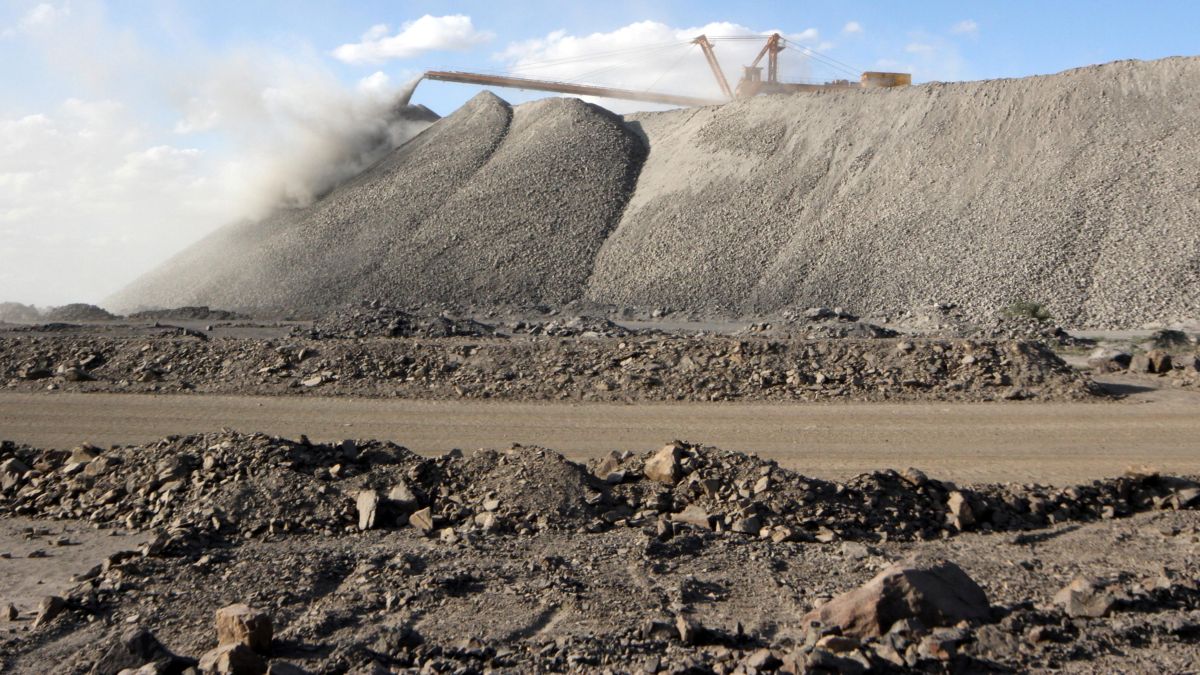
China has begun approving limited exports of rare earth elements under its new licensing regime, but delays in processing have raised alarm among global manufacturers about potential disruptions to critical supply chains.
Beijing introduced export controls in early April on seven rare earth elements and related permanent magnets essential to products such as electric vehicles, wind turbines, fighter jets, and humanoid robots. The move was widely seen as a response to a sweeping tariff package announced by US President Donald Trump on April 2.
While Chinese commerce officials have since granted some export licenses— including to companies supplying customers in Europe— industry participants say the approvals have been too slow and too limited to meet demand.
More from World
1. Population Projections (Next 30 Years)
Current Status: India stands at ~1.47 billion people as of 2026.
Short-term Growth: Projected to reach 1.52 billion by 2036.
Long-term Growth: Expected to settle between 1.6 and 1.65 billion by the mid-2050s.
Population Momentum: Growth is no longer driven by high birth rates, but by increased life expectancy and a large existing youth base.
2. Population Reduction Timeline
The Peak: The population is expected to hit its absolute maximum (approx. 1.7 billion) between 2060 and 2064.
The Decline: A gradual decline will begin after 2064.
Fertility Factors: India’s fertility rate has already fallen to 1.9–2.0, which is below the replacement level of 2.1.
3. Government Plans for Urban Congestion
Smart Cities Mission: Using tech-driven Command and Control Centers to manage traffic, water, and safety.
Basic Infrastructure (AMRUT): Ensuring universal access to water, sewerage, and green spaces in 500 cities.
Affordable Housing (PMAY-U): Moving slum dwellers into formal “pucca” housing to better manage land use.
Transit-Oriented Development: Building high-density residential and commercial zones directly around Metro and RRTS stations.
4. Global vs. Indian Solutions
Flood Management: Adopting the “Sponge City” model (permeable surfaces) used in China and Germany.
Vertical Living: Moving toward the Singapore/Tokyo model of high-density, integrated vertical hubs.
De-congestion: Building satellite cities (like GIFT City or New Gurgaon) to pull the population away from primary city centers.
Circular Economy: Implementing Waste-to-Energy projects similar to Scandinavian countries to manage the massive urban waste output.
“The window to avoid significant damage to production in Europe is rapidly closing,” Financial Times quoted Wolfgang Niedermark, a board member of the Federation of German Industries, as saying.
Volkswagen confirmed that its German operations had received rare earth supplies, noting that a “limited number” of licenses were issued to its suppliers. Other European manufacturers said they were still struggling to navigate China’s export bureaucracy, with one unnamed executive calling the delays “untenable.”
The new controls require exporters to submit end-use certifications to ensure materials are not used for military purposes or re-exported to the United States— a key condition under the licensing terms. Several exporters and buyers said the requirements were unclear and difficult to fulfill:
Flood Management: Adopting the “Sponge City” model (permeable surfaces) used in China and Germany.
Vertical Living: Moving toward the Singapore/Tokyo model of high-density, integrated vertical hubs.
De-congestion: Building satellite cities (like GIFT City or New Gurgaon) to pull the population away from primary city centers.
Circular Economy: Implementing Waste-to-Energy projects similar to Scandinavian countries to manage the massive urban waste output.
Global vs. Indian Solutions
Rajesh Jejurikar, head of the automotive division at India’s Mahindra & Mahindra, said the certification process remained opaque. A manager at Chengdu Galaxy Magnets said her company was assisting clients with statements for export approval, but any applications related to military use were categorically rejected.
The controls have prompted concern from major US companies, including Tesla, Ford, and Lockheed Martin. Lockheed, whose F-35 fighter jet uses rare earth magnets, said it has adequate supplies for now, and expects the US government to prioritise access.
Some suppliers say limited material continues to flow. Yantai Zhenghai Magnetic Material, based in eastern China, confirmed it had resumed taking orders after receiving export licenses. Other sources said certain long-standing clients were still receiving shipments even before formal approvals were granted.
“There is still material going out,” said Cameron Johnson, a supply chain expert at Tidalwave Solutions in Shanghai.
Government Plans for Urban Congestion
However, questions persist over whether China has resumed exports to the U.S. since both countries agreed to a temporary 90-day ceasefire in their tariff dispute. Analysts say Beijing’s strategic advantage lies in maintaining uncertainty. “Everyone wants Mofcom to provide clarity,” said Cory Combs of Trivium China, referring to China’s Ministry of Commerce. “But China’s strategic leverage relies partly on the ability to pull the export control lever to the extent that the US does not provide a satisfying deal.” With no full resolution in sight, experts say the episode will likely accelerate Western efforts to diversify supply chains and reduce dependence on Chinese rare earths. With no full resolution in sight, experts say the episode will likely accelerate Western efforts to diversify supply chains and reduce dependence on Chinese rare earths.






)

 "Do not update - Body Content Article Testing Revamp | Round")
 "Iran Protests: Crowds Set Fire To State Broadcasting Building, Take Over Port City Streets")

 "'Trade Deal Stuck Because PM Modi Didn't Call Trump': US Commerce Secy's Shocker")
)
 "New Restaurants That Have Been Launched In Mumbai That You Need To Try This January")
 "'Lalu Yadav, Family Acted As Criminal Syndicate': Delhi Court Frames Charges In Land-For-Job Scam Case")
 "'Our Rashtradoots': PM Modi Praises Indian Diaspora For Global Impact On Pravasi Bharatiya Diwas")

 "Gmail Users Get Free AI Tools And Features That Work For Their Inbox: Know More")

 "Tilak Varma Ruled Out Of First Three T20Is Against New Zealand")