

 "Experts Warn of Potential Economic Crisis This Summer")
Despite facing higher tariffs on nearly all imports and a crisis in the Middle East, the United States economy has remarkably remained stable. Inflation has mostly stayed steady, and the unemployment rate is near historic lows. Meanwhile, stocks reached new record highs last week.
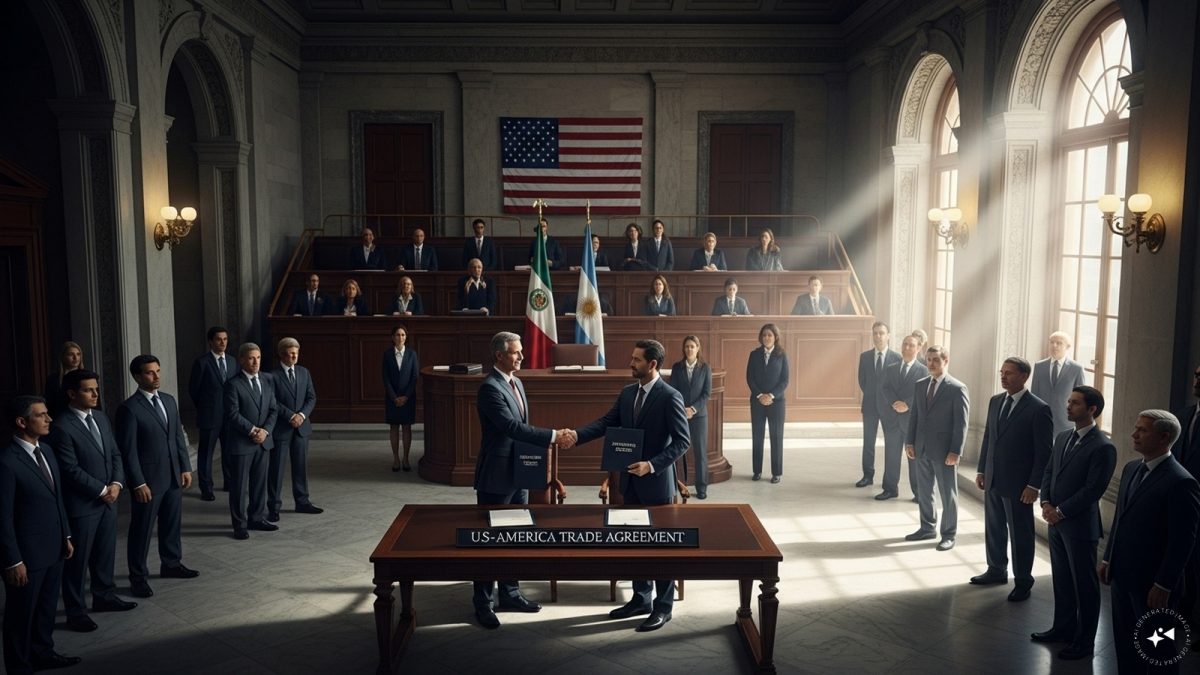
However, this stability could soon change as crucial deadlines approach. The first deadline is July 9, marking the end of President Donald Trump’s 90-day pause on ”reciprocal” tariffs on numerous trading partners. If these countries do not reach trade deals with the US, they could face significantly higher tariffs.
Following closely is the so-called X-date, when the government could default on its debt obligations, expected to occur in August. Treasury Secretary Scott Bessent emphasized the severe consequences of a US default, urging lawmakers to raise the debt ceiling before Congress’ recess on August 4. President Trump has pressured Congress to raise it by July 4, but this is complicated by his desire to pass his ”One Big, Beautiful Bill,” which includes raising the borrowing limit.
Another potential disruption is the fragile ceasefire between Iran and Israel, brokered by Trump. If this ceasefire collapses, it could cause oil prices to surge, exacerbating inflation from tariffs.
Ryan Sweet, chief US economist at Oxford Economics, noted that there is a lag between tariff changes and their impact on consumer prices. Other economic concerns include the rising number of people receiving unemployment benefits and consumers reducing their spending.
Trump has shown no limit to how high he will raise tariffs, with current tariffs including 50% on steel and aluminum, 25% on cars and auto parts, and a 10% minimum tariff on most countries’ goods. While Mexican and Canadian goods are exempt under the United States-Mexico-Canada Agreement, Trump announced new tariffs on Canadian goods due to a new tax.
Impact Shorts
View AllIn April, Trump announced a 90-day pause on tariffs to negotiate trade deals, but only two deals have been finalized with the UK and China. Trump acknowledged that it is unrealistic for 200 countries to finalize deals by July 9. He indicated that countries would be informed of the tariffs they must pay to do business in the US.
Trump administration officials have suggested potential extensions for countries negotiating in good faith. Treasury Secretary Bessent mentioned that around 20 countries could revert to the April 2 reciprocal tariff rate or stay at the 10% baseline if they are negotiating in good faith. Commerce Secretary Howard Lutnick suggested a regional tariff strategy, with 10 trade deals imminent.
The outcome of the July 9 deadline depends on how the Trump administration handles trade policy. Matthew Luzzetti, chief US economist at Deutsche Bank, suggested that a mix of extensions, trade deals, and threats of increased tariffs is likely, which could maintain the current economic status until uncertainty clears. Luzzetti’s team anticipates higher prices in the coming months, with more tariffs potentially adding to inflation.
Olu Sonola, US head of economic research at Fitch Ratings, expects Consumer Price Index inflation to trend higher towards 4% by the end of the year, potentially exceeding 4% if ”Liberation Day” tariffs return. The latest CPI report showed a 2.4% annual increase in prices.
Regarding the debt ceiling, Sweet expects lawmakers to raise it at the last minute, avoiding a default. While the exact timing is uncertain, Sweet believes lawmakers understand the severe political and economic consequences of not raising the debt limit.
For more CNN news and newsletters, create an account at CNN.com.
WHAT HAPPEND: The United States economy has remained stable despite higher tariffs and a Middle East crisis, with inflation steady and unemployment near historic lows. However, crucial deadlines are approaching, including the end of President Trump’s 90-day pause on tariffs on July 9 and the potential government debt default in August. Trump has pressured Congress to raise the debt ceiling by July 4, and the fragile ceasefire between Iran and Israel could impact oil prices. The administration is negotiating trade deals, but many countries may face higher tariffs if agreements are not reached by the deadline.
TELL ME MORE
The US has historically used tariffs as a tool to protect domestic industries and negotiate trade deals.
The debt ceiling is a cap set by Congress on how much the government is allowed to borrow to meet its existing legal obligations.
A default on US debt could lead to severe consequences, including higher borrowing costs and a potential global financial crisis.
The US-Mexico-Canada Agreement (USMCA) replaced NAFTA and aims to create more balanced and reciprocal trade between the three countries.
The Consumer Price Index (CPI) is a measure that examines the weighted average of prices of a basket of consumer goods and services, such as transportation, food, and medical care.
THE VOICES
“We know it’s coming. There’s a lag between changes in tariffs and when they show up in prices you and I are paying,” said Ryan Sweet, chief US economist at Oxford Economics.
“At a certain point, over the next week and a half or so, or maybe before, we’re going to send out a letter. We talked to many of the countries, and we’re just going to tell them what they have to pay to do business in the United States,” President Donald Trump told reporters from the White House press briefing room.
“We have a lot of great things going, and we’re getting along with countries, but some will be disappointed because they’re going to have to pay tariffs,” Trump added.
“There are probably another 20 countries where they could go back to the reciprocal tariff (rate) of April 2 as we work on the deal. Or, if we think that they are negotiating in good faith, then they could stay at the 10% baseline,” said Treasury Secretary Scott Bessent in a CNBC interview.
“You’ll have South American deals, African deals… We will put these people in their proper buckets on July 9,” said Commerce Secretary Howard Lutnick in a Bloomberg TV interview.
“It will all be up to President Trump,” said Scott Bessent.
“Whether or not the July 9th deadline spells trouble for the economy depends on how the Trump administration handles trade policy,” Matthew Luzzetti, chief US economist at Deutsche Bank, told CNN.
“If he were to reinstate the historically elevated tariffs announced on ‘Liberation Day,’ (April 2) this would bring back fears of an economic slowdown that were prevalent in April,” Luzzetti said, adding that it didn’t seem like a strong possibility.
“More likely, we get a mix of extensions, trade deals and threats of increased tariffs on specific countries or sectors. If that is the outcome, it could leave the economy in its current holding pattern for a bit longer until uncertainty clears,” Luzzetti said.
“Regardless of the outcome of these deadlines, we expect (Consumer Price Index) inflation to trend higher towards 4% at the end of the year. If ‘Liberation Day’ tariffs return, we’ll likely see inflation higher than 4%,” said Olu Sonola, US head of economic research at Fitch Ratings.
“This is essentially a very bad movie that we’ve seen before, so we know how it ends,” said Ryan Sweet.
“But each passing week you naturally get a little bit more nervous, because you don’t want to imagine the unimaginable,” Sweet said.
“I just don’t think that’s a very likely scenario, because I think lawmakers know that it would be political and economic suicide not to raise the debt limit,” Sweet said.
CONTEXT
The United States has been navigating a complex economic landscape marked by high tariffs on imports and geopolitical tensions in the Middle East. Tariffs are taxes imposed on imported goods, which can increase the cost of these goods and potentially lead to higher prices for consumers. The Trump administration has been known for its aggressive trade policies, including imposing significant tariffs on goods from various countries to protect American industries and reduce trade deficits.
The economic stability of the US is also being tested by the looming threat of a government default on its debt. The debt ceiling is a cap set by Congress on how much the government is allowed to borrow to meet its existing legal obligations. If the debt ceiling is not raised, the US could default on its debt, which would have severe consequences for the global economy. Historically, Congress has always acted to raise the debt ceiling to avoid default, but the process often involves intense political negotiations.
Additionally, the fragile ceasefire between Iran and Israel brokered by President Trump adds another layer of uncertainty. The Middle East is a critical region for global oil supply, and any escalation in conflict could lead to higher oil prices, further impacting inflation and economic stability.
Overall, the US economy is facing multiple challenges, including the potential for increased tariffs, the need to raise the debt ceiling, and geopolitical tensions. These factors create a precarious situation that could disrupt the current economic stability if not managed carefully.

 "Redirect Category Page URLs from /category/category slug/ to /category slug/ -")
 "This is a dummy article for testing purposes for artical type check")
 "Trump Hints at Imminent US-India Trade Deal, Promises Greater Market Access")
 "Test Artificial Intelligence (AI) is rapidly transforming the way we live v1")
 "Redirect Category Page URLs from /category/category slug/ to /category slug/ -")
 "This is a dummy article for testing purposes for artical type check")
 "Trump Hints at Imminent US-India Trade Deal, Promises Greater Market Access")
 "Test Artificial Intelligence (AI) is rapidly transforming the way we live v1")
 "vantage")


